Common Tax Mistakes Self-Employed People Make
January 21, 2026
What Happens After You Submit Your Self-Assessment?
January 23, 2026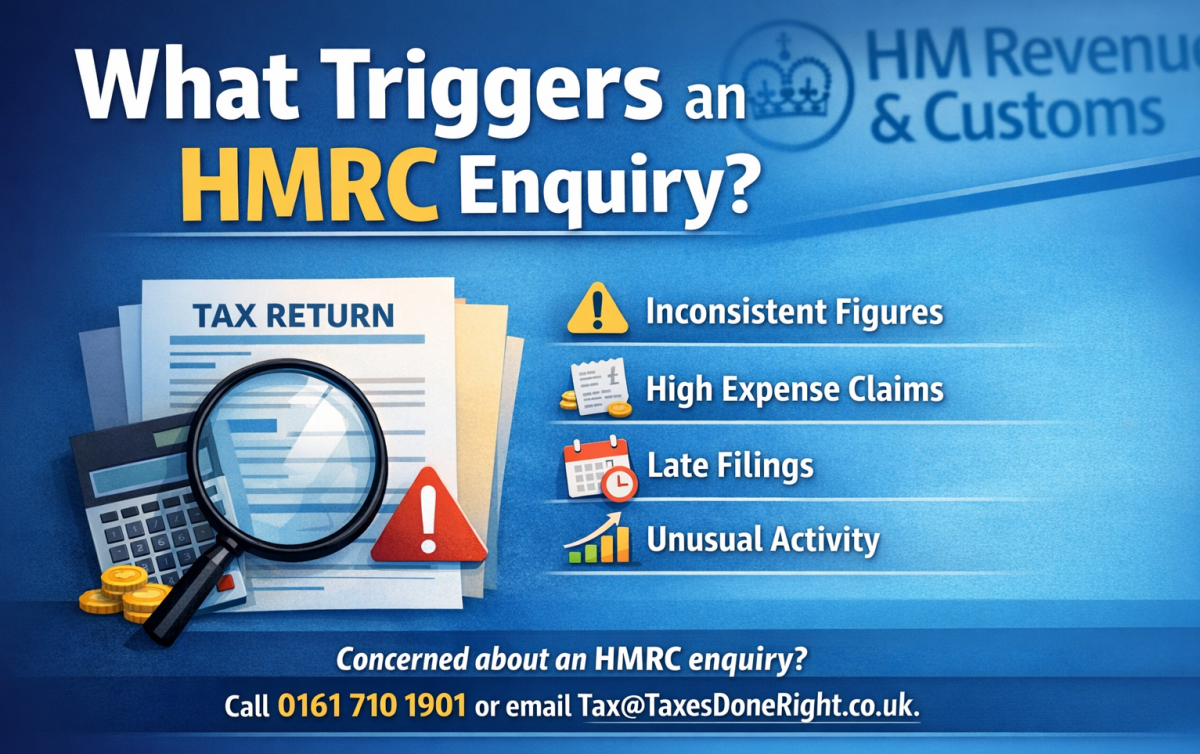
HMRC enquiries can feel daunting, but they are usually triggered by specific risk indicators rather than random chance. Understanding what raises a red flag can help individuals and businesses appreciate why HMRC may ask questions and what areas they scrutinise most closely.
Inconsistencies in Tax Returns
One of the most common triggers is inconsistency. This can be year‑to‑year figures that change significantly without a clear explanation, income that does not align with a taxpayer’s industry norms, or expenses that appear unusually high compared to turnover. HMRC uses sophisticated software to compare returns against historical data and similar taxpayers, making anomalies easy to spot.
Late Filing or Late Payment History
A pattern of filing returns late or paying tax after the deadline increases the likelihood of an enquiry. While a single late submission does not automatically trigger an investigation, repeated delays suggest poor compliance and can place a taxpayer on HMRC’s radar.
High or Unusual Expense Claims
Claiming expenses that are excessive, vague, or commonly abused can attract attention. This includes high home‑office claims, vehicle expenses that seem disproportionate to business activity, or large amounts of “miscellaneous” costs without clear detail. HMRC expects expenses to be wholly and exclusively for business purposes and supported by records.
Cash Based Businesses
Businesses that deal heavily in cash are statistically more likely to be reviewed. Sectors such as hospitality, construction, taxis, and retail are closely monitored because cash income is easier to under‑declare. HMRC often looks at lifestyle indicators and bank deposits to test whether declared income is realistic.
Property and Rental Income Issues
Property income is another frequent trigger. HMRC may investigate where rental income is omitted, expenses are over claimed, or ownership structures are unclear. Mismatches between Land Registry data, letting agent records, and tax returns can prompt questions.
Third Party Information and Data Matching
HMRC receives large volumes of information from third parties, including banks, employers, pension providers, letting agents, and online platforms. If this data does not match what is declared on a tax return, an enquiry may follow. This also applies to overseas income reported through international data‑sharing agreements.
Disclosures from Others
Sometimes enquiries arise because HMRC receives information from another source, such as a former business partner, an employee, or a report made through HMRC’s disclosure channels. These reports are assessed for credibility before any action is taken.
Previous Errors or Enquiries
Taxpayers who have previously made errors or have been subject to an enquiry may be more likely to face further scrutiny. HMRC considers past behaviour when assessing future risk, particularly if earlier issues were not fully resolved.
Random Checks
Although less common, HMRC does carry out random compliance checks to ensure the tax system is working fairly. Even in these cases, the scope of the enquiry is usually limited unless issues are uncovered.
Final Thoughts
An HMRC enquiry does not automatically mean something is wrong. In many cases, HMRC is simply seeking clarification or additional information. Keeping accurate records, filing on time, and ensuring returns are complete and consistent significantly reduces the likelihood of problems and makes any enquiry easier to deal with if it does arise.
If you are concerned about an HMRC enquiry or want to reduce the risk of one, contact Taxes Done Right.
Dm us:
Call: 0161 710 1901
Email: Tax@TaxesDoneRight.co.uk