Why Leaving Self-Assessment Until January Costs You More
January 19, 2026
Common Tax Mistakes Self-Employed People Make
January 21, 2026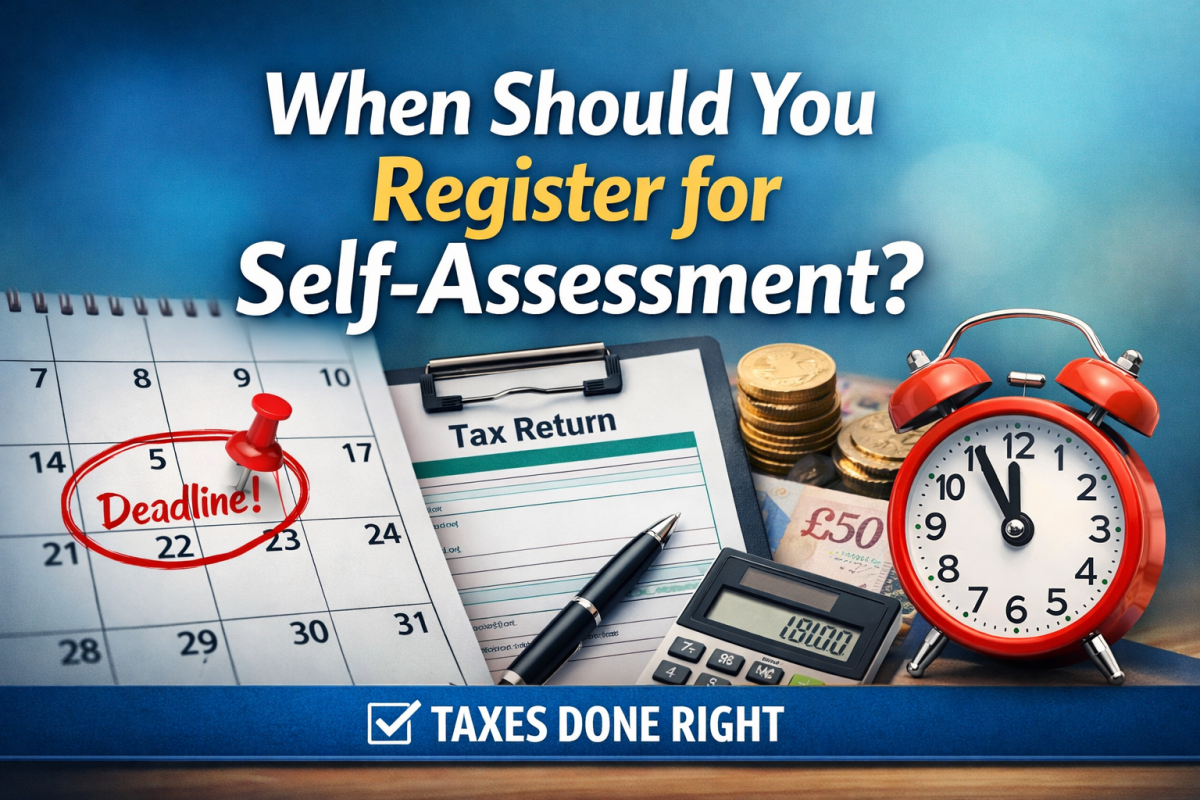
Registering for Self‑Assessment at the right time can save you stress, penalties, and unnecessary back‑and‑forth with HMRC. Many people leave it too late because they assume HMRC will contact them first. In reality, the responsibility sits with you to register once you meet the criteria.
This guide explains who needs to register, when to do it, and what happens if you miss the deadline, so you can stay compliant and avoid surprises.
What Is Self‑Assessment?
Self‑Assessment is the system HMRC uses to collect Income Tax from individuals whose tax is not fully deducted at source, such as through PAYE. Instead of HMRC calculating everything for you, you declare your income and HMRC calculates the tax due.
Who Needs to Register for Self‑Assessment?
You usually need to register if, during a tax year, you:
- Became self‑employed or a sole trader, even for a side hustle
- Earned more than £1,000 in self‑employment income (before expenses)
- Became a company director (unless all income is taxed via PAYE and no dividends)
- Received dividends over the dividend allowance
- Earned rental income from UK or overseas property
- Had foreign income that is taxable in the UK
- Made capital gains from selling assets such as property or shares
- Had income not taxed at source, such as commissions or casual income
If you are unsure whether your income is taxable, it is always safer to check early.
When Do You Need to Register?
The key date to remember is 5 October following the end of the tax year in which you first had untaxed income.
Example
- You started self‑employment in June 2025 (tax year 2025/26)
- The tax year ends on 5 April 2026
- You must register for Self‑Assessment by 5 October 2026
Missing this deadline does not remove your obligation to file, but it can lead to penalties if HMRC believe the delay was careless.
What If You Register Late?
If you register after 5 October, HMRC may:
- Charge a failure to notify penalty
- Add late‑filing penalties if the return is not submitted on time
- Add interest and late‑payment penalties if tax is unpaid
The longer the delay, the more expensive it can become.
What If You No Longer Need Self‑Assessment?
If your circumstances change, for example:
- You stop being self‑employed
- Your income is fully taxed through PAYE
- You no longer have untaxed income
You should tell HMRC so they can remove you from Self‑Assessment. Ignoring returns without notifying HMRC can still result in penalties.
Common Mistakes We See
- Waiting until January to register, then struggling to get a UTR in time
- Assuming HMRC will automatically register you
- Thinking small or side income does not count
- Forgetting to register after starting property rental income
Early registration makes the whole process smoother.
Final Thoughts
If you think you may need to register for Self‑Assessment, do it early. Registration is simple, but delays can cause unnecessary stress, penalties, and rushed filings.
If you are unsure whether you need to register, or you want help with registration and filing, getting advice early from Taxes Done Right can save you both time and money.
Need help with Self‑Assessment?
Contact us:
Call: 0161 710 1901
Email: Tax@TaxesDoneRight.co.uk
.