The Real Difference Between an Accountant and Accounting Software
May 25, 2026
When Does a Side Hustle Need to Be Declared to HMRC?
May 28, 2026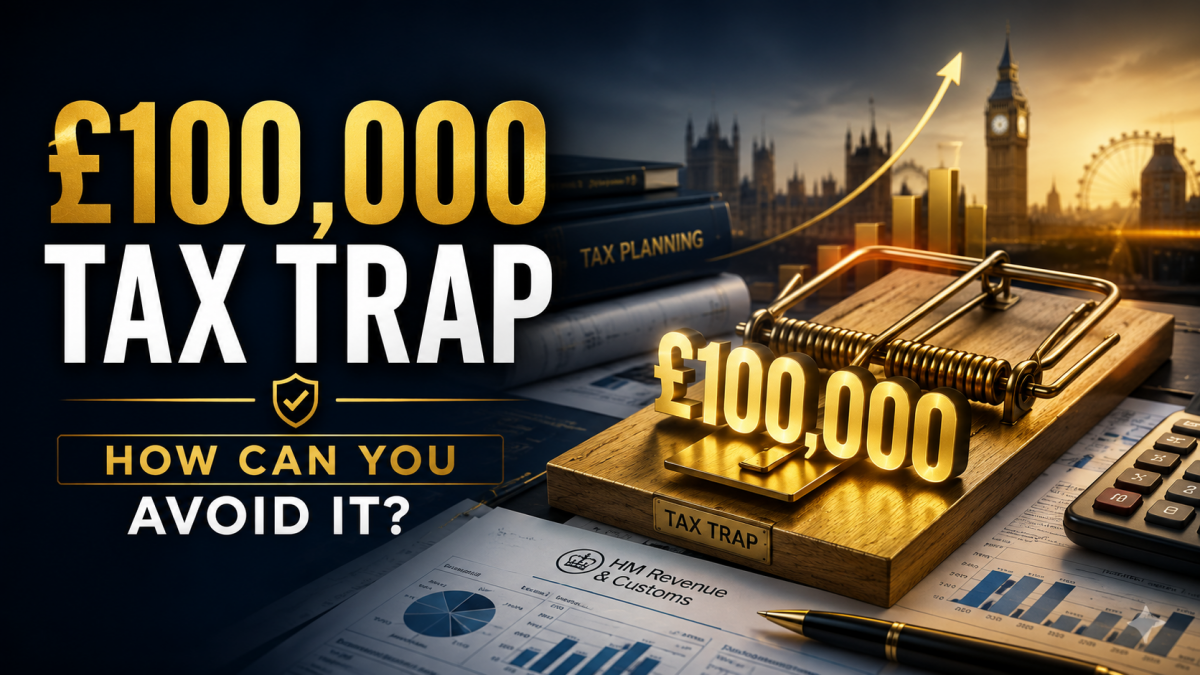
What Is the £100,000 Tax Trap and How Can You Avoid It
What Is the £100,000 Tax Trap?
The £100,000 Tax Trap is one of the most misunderstood parts of the UK tax system. Many higher earners assume moving above £100,000 simply means paying a slightly higher amount of tax. In reality, crossing this threshold can trigger a surprisingly high effective tax rate due to the gradual loss of the Personal Allowance.
For the 2026/27 tax year, most individuals receive a standard Personal Allowance of £12,570. However, once adjusted net income exceeds £100,000, this allowance begins reducing by £1 for every £2 earned above the threshold.
This means that by the time income reaches £125,140, the Personal Allowance is fully removed.
The result is what many refer to as the “60% Tax Trap”.
How the Tax Trap Creates a 60% Effective Tax Rate
The Tax Trap becomes expensive because you are effectively taxed twice on part of your income.
Here is how it works:
- Income between £100,000 and £125,140 is subject to:
- 40% higher rate tax
- Plus the loss of Personal Allowance
Because the allowance is withdrawn gradually, additional income becomes taxable that otherwise would have been tax free.
For every extra £2 earned:
- You lose £1 of tax-free allowance
- That £1 then becomes taxable at 40%
This creates an effective marginal tax rate of 60% on income within this band.
For many employed professionals, company directors, consultants, and business owners, this can come as a major surprise.
Example of the £100,000 Tax Trap
Imagine an individual earning £110,000 annually.
They are £10,000 above the £100,000 threshold.
This means:
- Their Personal Allowance reduces by £5,000
- An additional £5,000 becomes taxable
- They pay:
- 40% tax on the original £10,000 increase
- Plus additional tax because part of their tax-free allowance disappears
The effective tax cost on that income becomes far higher than many expect.
Without planning, some individuals end up keeping far less of their pay rise, bonus, or dividends than anticipated.
Who Is Most Affected by the Tax Trap?
The Tax Trap commonly affects:
- Company directors
- NHS consultants and senior healthcare professionals
- IT contractors
- Solicitors and accountants
- Property investors
- Senior employees receiving bonuses
- Business owners taking dividends
It is particularly common among limited company directors because salary, dividends, rental income, and benefits can all contribute toward adjusted net income.
Many people accidentally trigger the Tax Trap after:
- Receiving a bonus
- Taking additional dividends
- Selling investments
- Receiving rental profits
- Claiming benefits in kind
Tax Trap and Child Benefit
The Tax Trap can become even more expensive for families.
If adjusted net income exceeds £60,000, the High Income Child Benefit Charge may also begin applying. This can create another layer of tax exposure on top of the loss of Personal Allowance.
For households with multiple children, the combined effect can significantly reduce take-home income.
This is why tax planning becomes increasingly important once income approaches six figures.
How to Avoid the Tax Trap Legally
The good news is that the Tax Trap can often be reduced or avoided entirely with proper planning.
Pension Contributions and the Tax Trap
Pension contributions are one of the most effective ways to reduce adjusted net income.
For example:
- If income is £110,000
- A gross pension contribution of £10,000 could reduce adjusted net income back to £100,000
This may:
- Restore the full Personal Allowance
- Reduce higher rate tax exposure
- Improve retirement savings
- Potentially reduce Child Benefit charges
For many higher earners, pension contributions can produce extremely valuable tax relief within this income band.
Salary and Dividend Planning
For company directors, salary and dividend planning can help manage the Tax Trap more efficiently.
Rather than extracting all profits immediately, some directors:
- Adjust dividend timing
- Spread income across tax years
- Retain profits within the company
- Use pension contributions through the business
Careful planning can help avoid unintentionally crossing the £100,000 threshold.
However, planning should always consider:
- Corporation tax
- Dividend tax
- Future borrowing needs
- Mortgage applications
- Cash flow requirements
Gift Aid Donations and the Tax Trap
Gift Aid charitable donations can also reduce adjusted net income.
This means charitable giving may help:
- Restore Personal Allowance
- Reduce effective tax rates
- Support causes important to the individual
While donations should never be made purely for tax reasons, they can form part of wider tax planning strategies.
Why the Tax Trap Catches So Many People
One reason the Tax Trap causes problems is because many people focus only on headline tax bands.
They may assume:
- Higher rate tax is simply 40%
- A pay rise always improves net income substantially
In reality, the loss of Personal Allowance creates a hidden tax cliff edge that many employees and directors do not realise exists until after submitting their tax return.
This is especially common where:
- Bonuses are paid unexpectedly
- Dividends fluctuate
- Rental profits increase
- Additional freelance income arises
Without forward planning, unexpected tax bills can follow.
Final Thoughts on the £100,000 Tax Trap
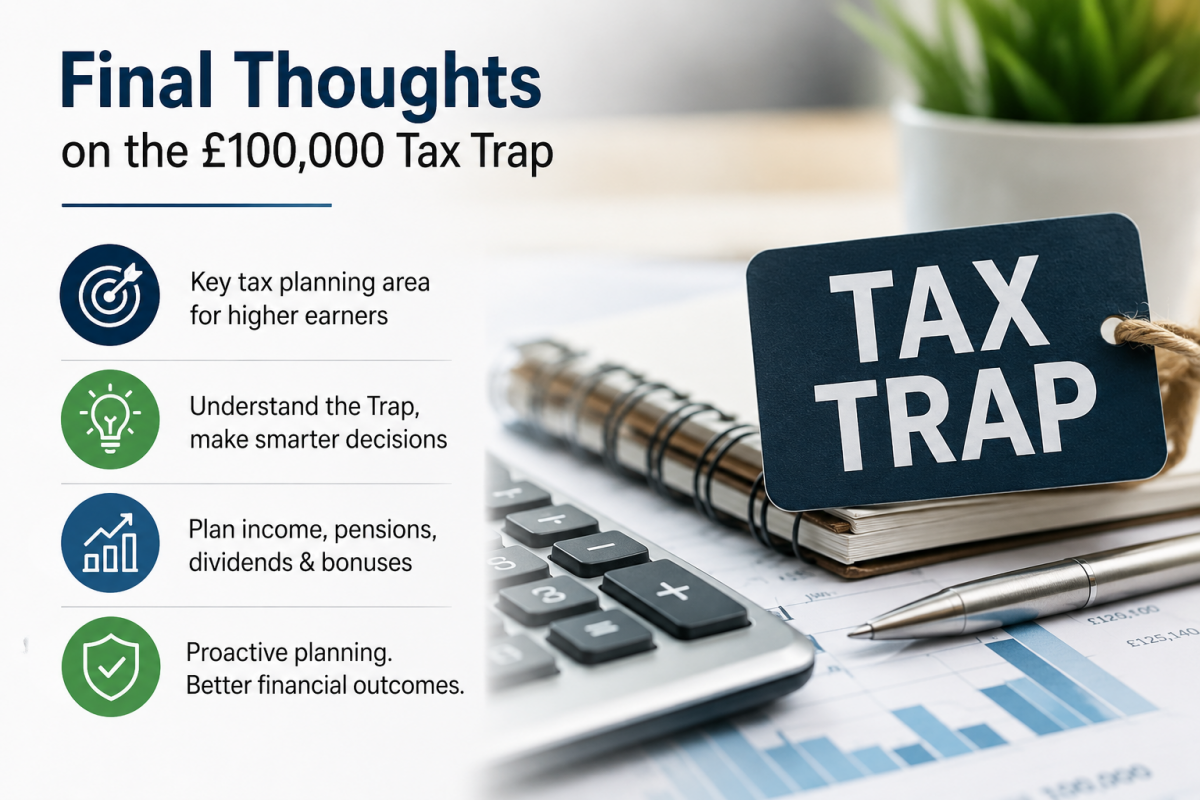
The £100,000 Tax Trap remains one of the most important tax planning areas for higher earners in the UK. While earning above £100,000 is a positive financial milestone, the loss of Personal Allowance can create a surprisingly high effective tax rate if ignored.
Understanding how the Tax Trap works allows individuals and company directors to make more informed decisions about pensions, dividends, bonuses, and overall income planning.
With proactive advice and careful structuring, many taxpayers can reduce unnecessary tax exposure and improve long-term financial efficiency.
Need help deciding what’s best for your situation?
📞 Call 0161 710 1901
📧 Email Tax@TaxesDoneRight.co.uk
🌐 Visit www.taxesdoneright.co.uk