ATED Explained: Is Your Limited Company Owing Annual Property Tax?
February 19, 2026
MTD for Landlords: What Property Owners Must Do Now
February 23, 2026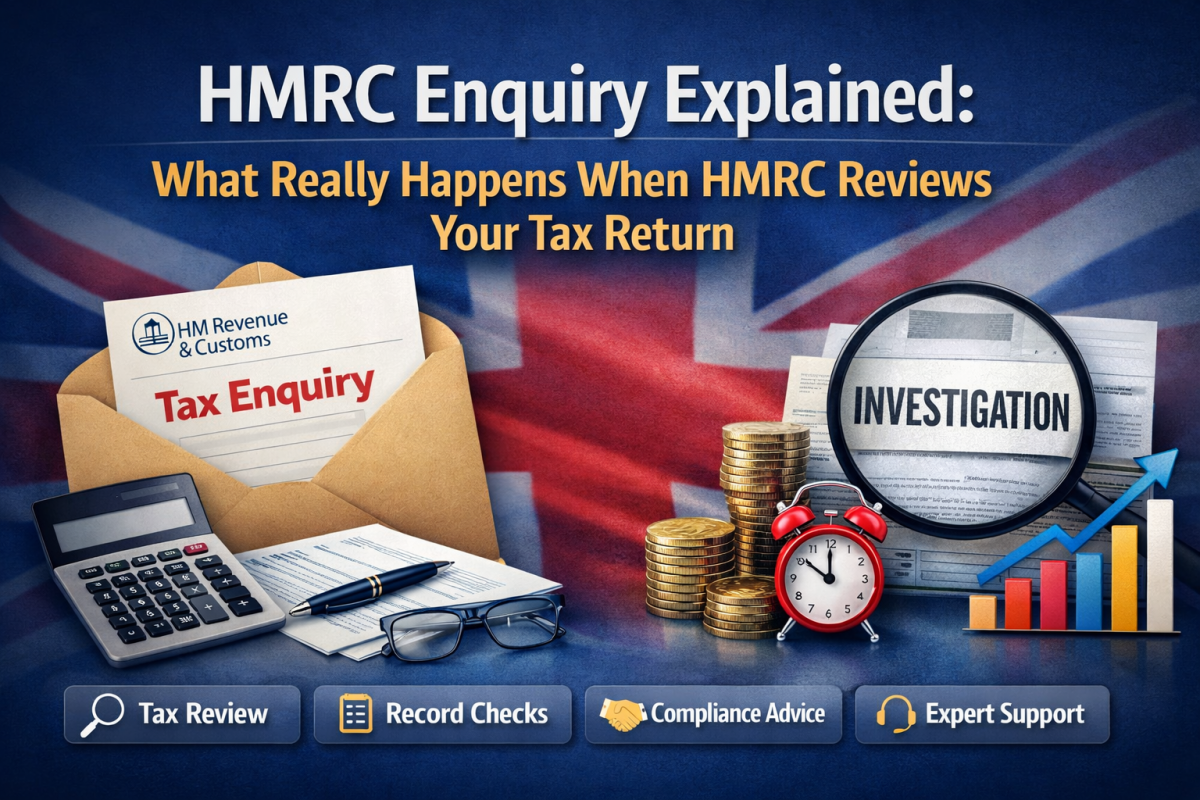
Receiving an HMRC enquiry letter can feel worrying for any taxpayer or business owner. Many people immediately assume they have done something wrong or that penalties are inevitable. In reality, HMRC enquiries are a normal part of the UK tax system and often arise from routine compliance checks rather than suspicion of wrongdoing.
Understanding what happens during an enquiry can help you stay calm, respond correctly, and minimise disruption.
What is an HMRC enquiry?
An HMRC enquiry is a formal review of a tax return or specific tax position. HMRC may open an enquiry into:
• Self Assessment tax returns
• Corporation tax returns
• VAT returns
• PAYE records
• Capital Gains Tax disclosures
The purpose is to confirm that the information submitted is accurate and that the correct amount of tax has been paid.
Why does HMRC open enquiries?
HMRC enquiries can be triggered for many reasons, including:
Random selection
Some enquiries are simply routine checks with no specific concern.
Data mismatches
HMRC receives data from banks, employers, Companies House, and other sources. If figures do not align, this can trigger questions.
Large or unusual claims
Significant expense claims, losses, or reliefs may prompt review.
Sector risk profiling
HMRC sometimes focuses on industries where errors are historically more common.
What happens when you receive the letter?
The enquiry process typically follows a structured timeline.
1. Opening letter
HMRC will send a formal notice stating which return is being reviewed and what information they require.
2. Information request
You may be asked for bookkeeping records, invoices, bank statements, explanations, or calculations supporting your return.
3. Review and follow-up
HMRC reviews the information provided and may ask additional questions.
4. Resolution
The enquiry concludes with either confirmation that no changes are needed or an adjustment to your tax position.
Does an enquiry mean penalties?
Not necessarily.
If your records support your return and everything is correct, HMRC will close the enquiry without changes.
If errors are identified, outcomes may include:
• Additional tax payable
• Interest on late tax
• Penalties (depending on behaviour and disclosure)
Penalties are generally lower where errors are careless rather than deliberate and where cooperation is shown.
How long do enquiries last?
The duration varies depending on complexity. Simple enquiries may close within weeks, while more detailed cases can take several months or longer.
Providing organised records and prompt responses is one of the most effective ways to shorten an enquiry.
How to protect yourself
Preparation is key to reducing stress and risk during an HMRC enquiry.
Maintain organised records
Keep invoices, receipts, bank statements, and supporting documents accessible.
Ensure bookkeeping accuracy
Regular reconciliations reduce discrepancies.
Understand claims and reliefs
Be confident that deductions are allowable and properly evidenced.
Seek advice early
Professional support can help frame responses correctly and avoid unnecessary escalation.
Final thoughts
An HMRC enquiry is not automatically a problem. In many cases, it is simply part of routine compliance checks. The outcome often depends on record quality, clarity of explanations, and how quickly requests are handled.
With good preparation and the right support, enquiries can be resolved smoothly and with minimal impact.
If you have received an HMRC enquiry letter or want reassurance that your records are enquiry-ready, professional guidance can make the process far more manageable.
Need help with an HMRC enquiry?
Call: 0161 710 1901
Email: Tax@TaxesDoneRight.co.uk
DM us:
www.taxesdoneright.co.uk