Should Landlords Still Own Property Personally in 2026?
December 29, 2025
Director’s Loan Accounts Common Mistakes That Cause Tax Charges
January 1, 2026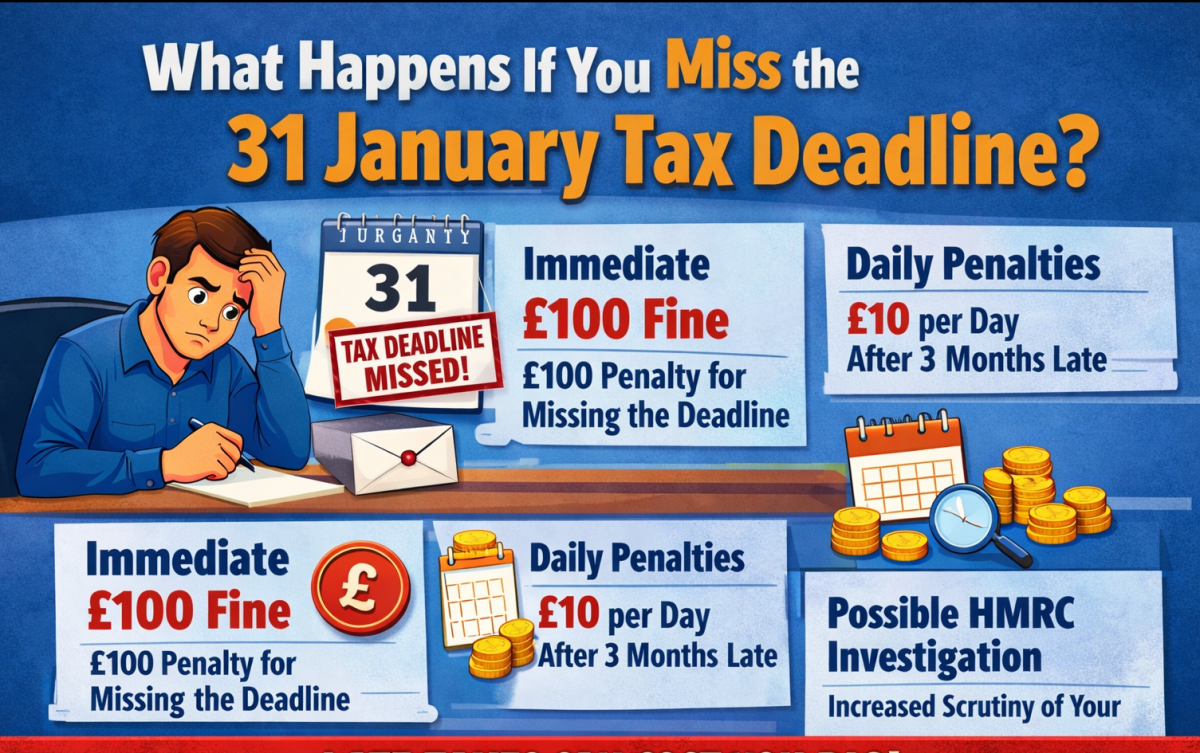
31 January is one of the most important dates in the UK tax calendar. It is the deadline for paying any tax owed under Self Assessment for the previous tax year, as well as making your first payment on account for the current tax year if applicable. Missing this deadline can quickly become costly and stressful, so it is important to understand the consequences and what to do if you are late.
Immediate late payment penalties
If you miss the 31 January payment deadline, HMRC will automatically charge a late payment penalty. This starts at 5% of the tax unpaid if the balance is still outstanding 30 days after the deadline. Further penalties of 5% are added at six months and again at twelve months if the tax remains unpaid.
These penalties apply even if you have filed your tax return on time but failed to pay the tax due.
Interest charged on late tax
In addition to penalties, HMRC will charge interest on any unpaid tax from 1 February onwards. Interest is calculated daily until the balance is cleared. This means the longer the tax remains unpaid, the more it will cost, even if penalties are not yet triggered.
Impact on payments on account
If you are required to make payments on account, missing the 31 January deadline can have a knock‑on effect. The January payment usually includes both the balancing payment for the previous tax year and the first payment on account for the current year. Failing to pay can leave you immediately behind for two tax years at once.
HMRC debt collection action
If the tax remains unpaid, HMRC may begin debt collection activity. This can include reminder letters, phone calls, and demands for payment. In more serious cases, HMRC can instruct debt collection agencies or take enforcement action, such as collecting directly from your bank account or pursuing court proceedings.
Effect on future dealings with HMRC
Repeated late payments can put you on HMRC’s radar and increase the likelihood of compliance checks or closer scrutiny of future tax returns. It can also affect your ability to agree time‑to‑pay arrangements if HMRC believes you have a history of non‑compliance.
What to do if you cannot pay on time
If you know you will not be able to pay by 31 January, it is important to act early. HMRC may agree a time‑to‑pay arrangement that allows you to spread the tax over monthly instalments. In many cases, arranging this before penalties are triggered can reduce additional charges.
It is also worth reviewing whether your tax bill is correct. Sometimes payments on account can be reduced if your income is genuinely lower for the following tax year, but this needs to be done carefully to avoid further penalties.
Key takeaway
Missing the 31 January tax deadline can result in penalties, interest, and escalating enforcement action. The cost increases the longer the tax remains unpaid, so early action is crucial. If you are struggling to pay or are unsure about your position, getting professional advice as soon as possible can help limit the damage and keep matters under control.